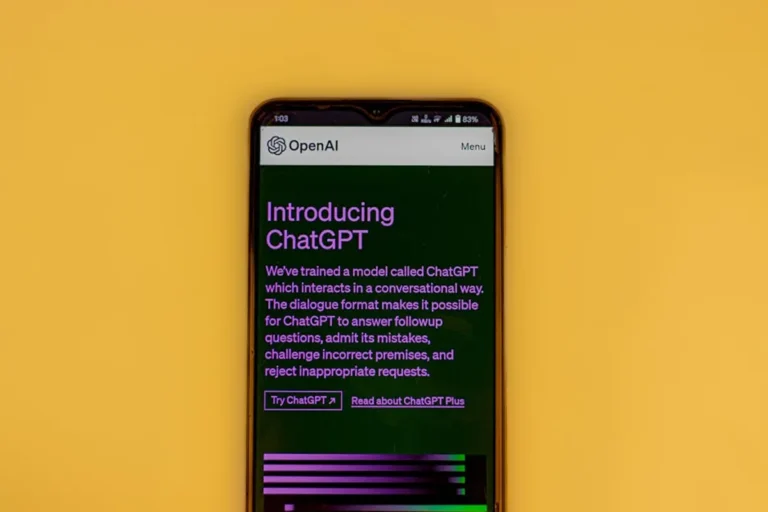
As AI models become more integrated into search, content generation, and information retrieval, understanding when and how these tools reference your website's content is no longer a niche concern—it is a critical component of modern SEO and brand management. AI citation tracking involves identifying instances where large language models (LLMs), AI-powered search features, or other automated systems use information directly sourced from your site, whether through direct quotes, paraphrased content, or factual assertions attributed to your domain. This practice moves beyond traditional backlink analysis, focusing instead on the intellectual lineage of information in an AI-driven landscape. For site owners, marketers, and SEO professionals, establishing a robust AI citation tracking methodology is essential for protecting intellectual property, validating content authority, and capitalizing on new visibility channels. This allows you to proactively monitor brand mentions in AI search and manage your online reputation effectively.
The Commercial Imperative of Tracking AI Citations
The proliferation of AI-generated content and AI-assisted search results introduces a new layer of complexity to online visibility. Your site's content, meticulously researched and optimized, represents significant investment. When AI tools leverage this content, it can manifest in several ways, each with distinct commercial implications:
- Attribution and Authority: Proper citation by AI reinforces your site's authority and expertise, contributing to E-E-A-T signals. Incorrect or missing attribution, however, undermines this.
- Traffic Generation: While direct links from AI responses are not guaranteed, clear attribution in AI outputs can drive users to seek out the original source, leading to direct traffic.
- Content Validation: Identifying which pieces of your content are frequently cited by AI highlights your most authoritative and valuable assets, informing future content strategy.
- Reputation Management: Monitoring AI citations allows you to detect instances where your content is misrepresented or used out of context, enabling proactive correction.
- Competitive Intelligence: Observing how AI cites competitors can reveal gaps in your own content or opportunities to enhance your authoritative footprint.
Ignoring AI citation tracking means operating without a complete picture of your content's reach and influence in an increasingly AI-dominated information ecosystem.
Strategies for Identifying AI-Driven Content Referrals
Identifying when AI tools cite your site requires a multi-faceted approach, combining traditional web monitoring with more specialized techniques.
Manual and Search-Based Detection
Begin with direct searches on AI-powered platforms and search engines. While not scalable, this provides qualitative insights:
- Direct Querying: Use specific phrases or unique facts from your content as queries in AI chatbots or search engines with integrated AI features. Observe if your site is listed as a source or if your content's unique phrasing appears in the AI's response.
- "Source" or "Cited By" Features: Some AI models or search generative experiences explicitly list sources. Regularly check these sections for your domain.
- Brand Mentions: Search for your brand name alongside key topics you cover. AI might attribute information to your brand even without a direct link.
Best for: Spot-checking, qualitative analysis, identifying specific high-value content citations.
Automated Content Monitoring and Web Scraping
For a more scalable approach, automated tools are necessary. These typically involve monitoring vast swathes of the web for specific text patterns or domain mentions:
- Web Monitoring Services: Platforms designed to track brand mentions, news coverage, and content syndication can be configured to look for your domain or specific content phrases across various online sources, including those that might be AI-generated or AI-influenced.
- Custom Scripting and Scraping: For advanced users, developing custom scripts to periodically scrape and analyze results from AI-powered search interfaces or public AI outputs can identify patterns of citation. This requires technical expertise to parse and interpret unstructured data.
- Backlink Analysis Tools with Advanced Text Matching: While primarily for links, some advanced backlink tools offer content analysis features that can detect instances where your content text appears on other sites, which could include AI-generated summaries or responses.
Best for: Scalable detection, identifying broad trends, proactive alerts for new citations.
Log File Analysis and Referrer Data
Your server logs contain valuable information about how various agents interact with your site. While directly identifying an "AI bot" can be challenging, certain patterns can be indicative:
- Unusual User-Agent Strings: Monitor for user-agent strings that don't correspond to known human browsers or established search engine crawlers. Some AI systems might use unique or less common identifiers.
- High Volume, Low Engagement Access: Large numbers of requests for specific pages from a single IP range or user-agent, followed by no further interaction (e.g., no clicks, no time on site), could suggest automated content ingestion.
- Referrer Analysis: While AI responses often don't provide direct referrer links, monitoring referrer data for unexpected sources or patterns can sometimes offer clues.
Best for: Technical insights, identifying potential content ingestion, understanding bot behavior.
Pro Tip: The ephemeral nature of AI-generated content means that a citation visible today might not be present tomorrow. Implement a system for immediate capture (e.g., screenshots, text exports) when a significant AI citation is identified. This ensures you have concrete evidence for analysis or dispute resolution, especially when dealing with misattributions or factual errors.
Analyzing and Responding to AI Citations
Once an AI citation is identified, the next step is to analyze its quality and determine an appropriate response.
Assessing Citation Quality and Context
Evaluate:
- Accuracy: Is the information correctly attributed and accurately represented?
- Completeness: Is the context preserved, or is the information stripped of crucial nuances?
- Placement: How prominently is your site cited? Is it a primary source or one of many?
- Type of Citation: Is it a direct quote, a paraphrase, or a factual assertion based on your data?
Leveraging Positive Citations
When your site is accurately and positively cited by AI, it's an opportunity:
- Content Strategy Validation: This confirms your content's value and authority on specific topics. Double down on these areas.
- Internal Reporting: Use these instances as evidence of content effectiveness and E-E-A-T signals for stakeholders.
- Public Relations: While not a traditional media mention, consistent AI citation can be framed as recognition of your site's expertise.
Addressing Misattributions or Errors
If an AI misrepresents your content or fails to attribute it, the response depends on the platform:
- Feedback Mechanisms: Many AI models and search interfaces include feedback options. Use these to report inaccuracies or missing attributions.
- Content Refinement: Sometimes, content can be rephrased or structured more clearly to reduce ambiguity and encourage accurate AI interpretation. Explicitly stating "According to [Your Brand]" within your content can also help.
- Legal Review: In cases of significant intellectual property infringement or persistent misrepresentation, legal counsel may be necessary, though this is often a last resort.
Building a Proactive AI Citation Strategy
Integrating AI citation tracking into your broader SEO and content strategy involves ongoing effort:
- Define Key Content Assets: Identify your most valuable, authoritative, and frequently updated content pieces. These are your primary candidates for AI citation.
- Establish Monitoring Protocols: Set up a combination of manual checks, automated alerts, and log analysis routines. Assign responsibility for monitoring and reporting.
- Regular Review and Analysis: Periodically review identified citations. Analyze trends in attribution, content types cited, and AI model behavior.
- Iterate Content for Clarity: Based on observations, refine your content to make it more digestible and less prone to misinterpretation by AI. Use clear headings, structured data, and explicit sourcing within your own articles.
- Advocate for Proper Attribution: Where possible, engage with platforms or provide feedback to encourage clearer and more consistent attribution practices from AI systems.
Frequently Asked Questions About AI Citation Tracking
Why is AI citation tracking important for my website?
AI citation tracking is crucial for validating your content's authority, protecting your intellectual property, driving potential traffic from AI-driven queries, and maintaining brand reputation in an evolving search landscape where AI models increasingly summarize or generate content based on web sources.
Can AI tools directly link to my site when they cite it?
While some AI-powered search experiences or chatbots may provide direct links to sources, it is not guaranteed. Often, AI might paraphrase, summarize, or attribute information without a clickable link. The goal is to ensure your brand or site is recognized as the authoritative source, which can still indirectly drive traffic.
What are the biggest challenges in tracking AI citations?
Key challenges include the dynamic and often ephemeral nature of AI outputs, the lack of standardized attribution methods across different AI models, the difficulty in distinguishing AI-generated content from human-written content, and the sheer volume of data to monitor. It requires a combination of manual vigilance and advanced technical solutions.
How does AI citation tracking relate to E-E-A-T?
When AI tools consistently cite your website as a source for accurate and authoritative information, it reinforces your site's Expertise, Experience, Authoritativeness, and Trustworthiness (E-E-A-T). This external validation from advanced systems can signal to search engines that your content is high-quality and reliable, potentially influencing your organic search performance. This means it's vital to track AI search results to understand how your brand is perceived.