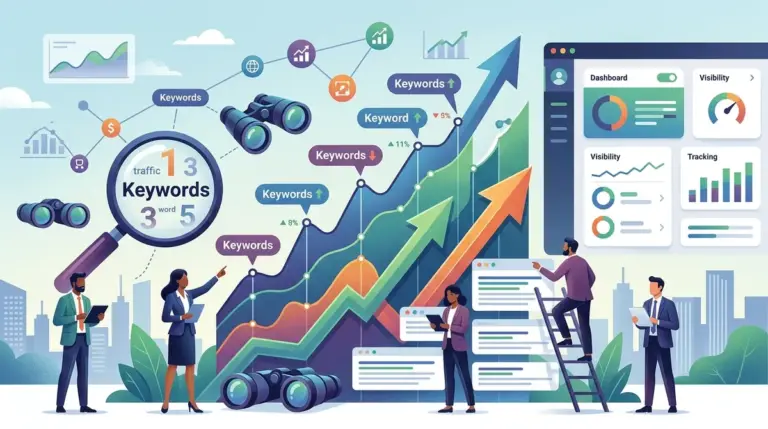


Modern rank tracking has evolved from a simple spreadsheet exercise into a complex data science operation. For an SEO professional or agency lead, the value of a tracking tool is no longer just about seeing a number next to a keyword; it is about the reliability of the underlying infrastructure and the ability to parse a highly fragmented search engine results page (SERP). To understand how tracking works today, you must look past the dashboard and into the mechanics of data retrieval, localization, and SERP feature attribution.
The Technical Infrastructure of Data Collection
At its core, keyword rank tracking relies on automated agents—often headless browsers—that simulate a user’s search query. However, the process is far more sophisticated than simply "scraping" a page. Modern trackers must navigate anti-bot measures and localized filters to return accurate data.
Proxy Networks and IP Rotation: To prevent search engines from serving cached or biased results based on a single IP address, tracking platforms utilize vast networks of residential and data-center proxies. This allows the tool to request data from specific geographic locations without being flagged as a bot. If a tool lacks a robust proxy network, you will often see "jitter" in your data—rankings that jump erratically because the search engine is serving a generic or throttled version of the SERP.
Headless Browsing: Modern SERPs are heavy with JavaScript. Simple HTML crawlers often miss dynamic elements like "People Also Ask" (PAA) boxes or interactive maps. High-end trackers use headless browser technology (like Puppeteer or Playwright) to fully render the page exactly as a human user would see it. This ensures that every pixel of the SERP is accounted for before the data is parsed into a report.
Localization and the Death of "National" Rankings
The concept of a single "national" rank is largely a relic. Google and Bing now customize results based on the user's precise GPS coordinates, IP address, and search history. For businesses with a physical footprint or regional service areas, tracking must be hyper-local.
Granular Geo-Targeting: Effective tracking now happens at the city, zip code, or even neighborhood level. A search for "commercial insurance" in Manhattan will yield different results than the same search in Brooklyn. Modern tools allow you to specify the exact latitude and longitude for the request, providing a true reflection of what local customers are seeing.
Mobile vs. Desktop Parity: Mobile-first indexing means that tracking desktop rankings alone is a strategic blind spot. Mobile SERPs are often more compressed and feature-heavy, with a different hierarchy of local packs and image carousels. A tracking setup that doesn't distinguish between these two environments will fail to explain discrepancies in click-through rates (CTR).
Warning: Beware of "ghost rankings" caused by data center lag. If your tracking tool reports a major jump or drop that isn't reflected in Google Search Console's average position over a 3-day rolling window, you are likely looking at a temporary edge-case SERP or a localized test by the search engine, not a permanent algorithm shift.
Beyond the Blue Link: Tracking SERP Features
In the current SEO landscape, being "Position 1" for a blue link might actually mean being halfway down the page on a mobile device, buried under an AI Overview, a Sponsored block, and a Map Pack. Tracking must now account for "Visual Rank" or "Pixel Depth."
- Featured Snippets: Often called Position Zero, these are tracked separately to measure how much "real estate" a brand controls.
- Local Packs: For local SEO, tracking the 3-pack is more critical than tracking the standard organic listings.
- People Also Ask (PAA): Tracking whether your site appears in these accordions helps map out the user’s informational journey and identify content gaps.
- AI Overviews (SGE): The newest frontier involves tracking whether a brand is cited within AI-generated summaries, which requires specialized parsing of the generative layer of the SERP.
Data Refresh Frequency and Volatility
The speed at which search engines update their indices requires a corresponding frequency in tracking. While weekly updates might suffice for low-competition niche sites, enterprise-level SEO requires daily or even on-demand refreshes.
On-Demand Updates: When a site undergoes a major migration or a significant content refresh, waiting for a weekly scheduled crawl is unacceptable. Modern tracking allows for manual triggers to verify that changes have been indexed and to observe the immediate impact on rankings. This is particularly useful during "Core Updates," where SERP volatility can fluctuate wildly within a 24-hour period.
Algorithm Volatility Monitoring: Many tracking platforms now aggregate data across their entire user base to create a "volatility index." By comparing your site's movement against the broader market, you can determine if a drop in rankings is a site-specific technical issue or a broader industry-wide shift.
Integrating Rank Data with Business Intelligence
Raw ranking data is a vanity metric unless it is tied to traffic and revenue. The final stage of modern rank tracking is the integration of these positions into a larger data ecosystem. By layering rank data over Search Console impressions and Google Analytics conversions, marketers can calculate the specific dollar value of moving from Position 4 to Position 2 for a high-intent keyword.
Share of Voice (SoV): This metric calculates your brand's visibility across a set of keywords relative to your competitors. It weights rankings by search volume and CTR estimates, providing a more accurate picture of market dominance than a simple average position. If your average rank stays the same but your SoV drops, it means your competitors are winning the high-volume terms while you are stuck on the "long tail."
Building a Resilient Tracking Strategy
To move from basic monitoring to a professional-grade SEO strategy, audit your current tracking setup against these requirements. Ensure your tool is not just looking at a static list of words, but is instead simulating real-world user behavior across multiple devices and locations. Start by segmenting your keywords into "buckets" based on intent—transactional, informational, and navigational—and track them with different frequencies and localization settings. This approach ensures that your data is not just a report of the past, but a diagnostic tool for future growth.
Frequently Asked Questions
How often should I refresh my keyword rankings?
For most businesses, daily tracking is the standard. It provides enough data points to spot trends during algorithm updates without creating excessive noise. However, for high-stakes ecommerce sites during peak seasons like Black Friday, on-demand or hourly tracking for top-tier "money" keywords is recommended.
Why does my tracking tool show a different rank than my browser?
This is usually due to personalization. Your personal search results are influenced by your browsing history, logged-in Google account, and physical location. Professional tracking tools use "clean" browser sessions and specific proxy locations to provide a neutral, unbiased view of the SERP.
Does rank tracking affect my site's performance?
No. Rank tracking tools interact with the search engine's results pages, not your website's servers. They do not crawl your site in a way that would impact page load speeds or server resources, making them a safe third-party monitoring solution.
What is the difference between organic rank and visual rank?
Organic rank refers to your position among the traditional "blue links." Visual rank (or pixel depth) measures how far a user actually has to scroll to see your result. With the rise of ads and SERP features, a result in organic Position 1 might have a poor visual rank if it is pushed "below the fold."