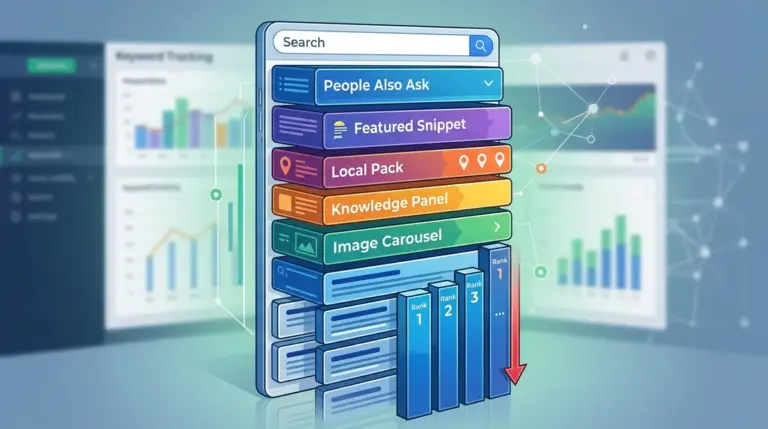


Tracking keyword rankings without segmenting by device type is a recipe for data misinterpretation. A site sitting at position three on a desktop search may not even appear on the first screen of a mobile device due to the intrusion of local packs, sponsored carousels, and visual search features. For SEO professionals, the goal is not just "ranking," but visibility that translates to clicks. Understanding the mechanical and algorithmic differences between desktop and mobile SERPs is the first step in building a strategy that captures high-intent traffic across all hardware.
The Technical Divergence Between Desktop and Mobile SERPs
Google operates on a mobile-first index, meaning the smartphone version of your website is the primary version used for crawling and indexing. However, the actual search engine results page (SERP) is generated dynamically based on the user’s device. Desktop results often prioritize information density and multi-column layouts, while mobile results are optimized for speed, location-based utility, and touch interaction.
The primary driver of rank variance is the difference in available screen real estate. On a 27-inch desktop monitor, a user might see three organic results above the fold alongside a sidebar of related information. On a 6.1-inch smartphone screen, that same user might see a single "People Also Ask" block and a sponsored ad before reaching the first organic link. This compression forces Google to prioritize different types of content for mobile users, often favoring concise, structured data over long-form editorial content.
Screen Real Estate and the "Fold" Problem
In mobile search, the "fold" is significantly higher. If your keyword ranks at position four, you are effectively invisible on mobile without a scroll. On desktop, position four is often still highly visible. This disparity means that a "Top 5" ranking is a success on desktop but a potential traffic failure on mobile. Marketers must track "pixel depth"—the actual distance a user must scroll to see a result—rather than just the numerical rank to understand the true impact of device-specific positioning.
Local Intent and Geo-Specific Variance
Mobile devices provide Google with high-precision GPS data, whereas desktop searches often rely on less accurate IP-based location tracking. This technical difference fundamentally changes the Local Pack (the "Map Pack") results. A user searching for "commercial HVAC repair" from a mobile phone while standing in an industrial park will see different results than a user searching for the same term from a desktop computer at a home office ten miles away.
Best for: Service-based businesses and brick-and-mortar retailers who need to capture "near me" traffic. If your mobile rankings are lagging behind desktop, it usually indicates a failure to optimize for local signals or a lack of proximity relevance in your Google Business Profile.
- Proximity: Mobile results are hyper-sensitive to the user's current coordinates.
- Connectivity: Mobile SERPs may hide heavy, media-rich sites if the user is on a slow cellular connection.
- App Interconnectivity: Mobile results frequently suggest "Open in App" or deep-link to installed applications, which bypasses traditional web rankings entirely.
- SERP Features: Mobile users see more "Short Videos" and "Image Packs," while desktop users see more "Knowledge Panels" and "Related Searches."
Warning: Do not assume that a high desktop ranking guarantees mobile traffic. Google frequently applies "speed demotions" to mobile results for pages that fail Core Web Vitals, even if those pages have superior backlink profiles and content depth.
Page Speed as a Ranking Weight
While Core Web Vitals (CWV) are a ranking factor for both platforms, their impact is felt more acutely on mobile. Mobile hardware has less processing power than desktop computers, and cellular networks have higher latency than fiber or cable internet. Google’s algorithms recognize this friction. If a page has a high Largest Contentful Paint (LCP) or significant Cumulative Layout Shift (CLS), it may be suppressed in mobile rankings to protect the user experience, even if it maintains a top position on desktop where the hardware can "power through" the site's technical inefficiencies.
User Intent Mapping by Device
Google categorizes queries into different intent buckets: "Know," "Do," "Website," and "Visit-in-person." The device type often signals which intent is dominant. Desktop queries are frequently "research-heavy" or "transactional-complex" (e.g., comparing enterprise software features). Mobile queries are often "transactional-immediate" or "navigational" (e.g., looking for a login page or a store location). Consequently, Google may rank a 3,000-word guide higher on desktop, but prioritize a quick-loading FAQ or a direct service page on mobile for the exact same keyword.
Practical Strategies for Multi-Device Rank Tracking
To manage these differences, SEOs must stop looking at "blended" rank data. You need to segment your reporting to see the delta between mobile and desktop positions. If you notice a gap of more than three positions between devices, it is a signal that your technical SEO or content format is misaligned with the device's typical user intent.
For example, if your desktop rank is #2 but your mobile rank is #8, check your mobile page speed and the presence of intrusive interstitials (pop-ups). Google penalizes mobile sites that use aggressive pop-ups that cover the main content, a penalty that is rarely applied with the same severity to desktop versions.
Aligning Content with Device Performance
To bridge the gap between device rankings, focus on these three specific technical areas:
First, ensure your CSS is truly responsive. Elements that overlap or require horizontal scrolling on mobile will lead to high bounce rates, which Google interprets as a lack of relevance. Second, optimize your "above the fold" content for mobile. Use jump links and concise summaries so mobile users get their answers immediately. Third, audit your SERP features. If a keyword triggers a "Local Pack" on mobile but not on desktop, your mobile strategy must focus on local SEO, while your desktop strategy focuses on traditional organic link building.
Ultimately, device-specific ranking is about meeting the user where they are. A desktop user has time; a mobile user has a goal. Your rankings will reflect how well you serve both.
Frequently Asked Questions
Why is my mobile rank lower than my desktop rank?
This is usually caused by slow mobile page load speeds, poor Core Web Vitals, or intrusive mobile pop-ups. It can also happen if your site is not mobile-responsive, causing a poor user experience that leads to lower engagement signals.
Does Google use different bots for desktop and mobile?
Google primarily uses the Googlebot Smartphone crawler for indexing. While there is a desktop crawler, the mobile-first indexing policy means the smartphone crawler's findings determine your rankings for both desktop and mobile searches in most cases.
Should I track mobile and desktop rankings separately?
Yes. Because SERP features (like Local Packs and Image Carousels) vary by device, your visibility and click-through rate will differ. Tracking them separately allows you to identify if you are losing traffic due to device-specific layout changes or technical performance issues.
Can location affect desktop and mobile ranks differently?
Yes. Mobile devices use GPS for precise location data, making them more likely to trigger hyper-local results. Desktop searches use IP addresses, which are less precise and may show results for a broader geographic area, such as a city rather than a specific neighborhood.