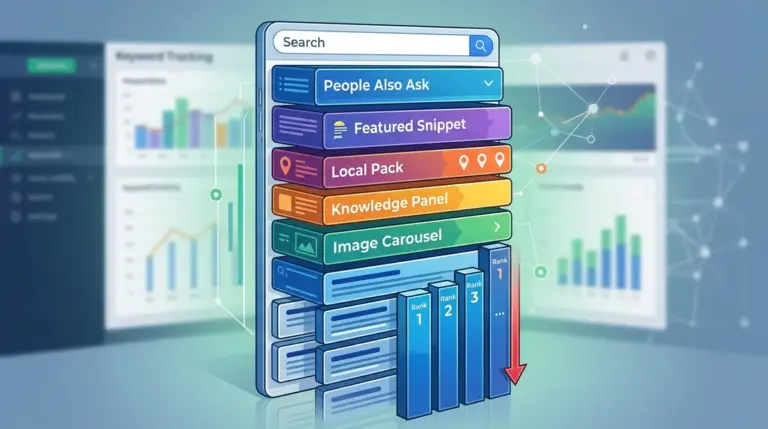


Panic is a common reaction when an SEO dashboard shows a sudden dip in keyword positions. However, reacting to every minor fluctuation leads to inefficient resource allocation and "over-optimization" that can actually harm a site’s long-term performance. Distinguishing between a temporary SERP tremor and a fundamental loss of visibility requires a systematic approach to data analysis that looks beyond the single-day delta.
Defining the Threshold for Action
Search engines are dynamic systems. Algorithms constantly test different results to satisfy user intent, and "normal" volatility is the byproduct of this testing. For most high-volume keywords, a movement of 1 to 3 positions is rarely a cause for alarm. This is often the result of localized search variations, personalized results, or the "Query Deserves Freshness" (QDF) factor where Google temporarily boosts new content to see how users interact with it.
Best for: Determining when to investigate further. If a keyword drops more than 5 positions and stays there for more than 72 hours, or if an entire category of keywords drops by 3+ positions simultaneously, it moves from "volatility" to "potential loss."
The Sawtooth Pattern vs. The Staircase
Visualizing your ranking data over a 30-day or 90-day period is the fastest way to diagnose the health of a keyword. Normal volatility usually manifests as a "sawtooth" pattern—up two spots, down one, up three, down two. This indicates that your content is still in the relevant "neighborhood" for the query. A real ranking loss typically looks like a "staircase" (a steady, incremental decline over weeks) or a "cliff" (a sudden drop from page one to page five or deeper).
Pro Tip: Always cross-reference ranking drops with your "Share of Voice" or "Pixel Height" metrics. A drop from position 1 to 3 might be due to a new Featured Snippet or a massive "People Also Ask" block pushing organic results down the page, rather than a loss of perceived authority.
Correlating Rank Drops with Click-Through Data
Rankings are a proxy metric; traffic and conversions are the primary objectives. Before diagnosing a technical SEO issue, check your Google Search Console (GSC) data for that specific URL. If your rank has dropped by two positions but your Click-Through Rate (CTR) has remained stable or increased, the "loss" may be an illusion caused by Google changing the SERP layout or removing a competitor's result that was previously skewing the average.
- Check Impressions: If impressions remain steady while rankings drop, you are likely losing "vanity" positions that weren't driving volume anyway.
- Analyze Device Split: A ranking loss that only appears on mobile suggests a Core Web Vitals issue or a mobile-usability error rather than a content quality problem.
- Review Search Intent: If the top results for your target keyword have shifted from "educational blog posts" to "product category pages," Google has reclassified the intent of the query. Your content hasn't "failed"; it no longer matches what the user is looking for.
Identifying Algorithm-Induced Volatility
When rankings drop across a broad spectrum of unrelated pages, the cause is usually external. Major core updates or "unconfirmed" tweaks to the weighting of backlinks or on-page signals can cause massive shifts. In these instances, the volatility is the new baseline.
To confirm an algorithm-driven shift, use a SERP volatility sensor to see if the entire industry is experiencing similar turbulence. If the "weather" is high across the web, the best move is often to do nothing. Historically, sites that make drastic changes during the middle of a core update often miss out on the "recovery" phase that happens once the update finishes rolling out and the data stabilizes.
Internal Factors That Mimic Ranking Loss
Sometimes, what looks like a ranking loss is actually a self-inflicted technical wound. Before assuming a competitor has out-hustled you, run a diagnostic check on these three areas:
URL Swapping and Cannibalization
If you see a keyword jumping wildly between position 5 and position 50, check which URL is ranking. Often, Google is struggling to decide between two similar pages on your site. When it picks the "wrong" (less optimized) page, your rank drops. This isn't a loss of authority; it's a lack of clarity in your internal linking and site structure. Consolidating these pages or sharpening the internal anchor text usually resolves the "volatility."
Technical Debt and Crawl Errors
A sudden drop in rankings for a specific sub-folder often points to a technical deployment gone wrong. Check for accidental noindex tags, robots.txt blocks, or a spike in 404 errors. If Googlebot cannot reliably access a page, it will quickly demote it in favor of a stable alternative. Use a log file analyzer to see if the crawl frequency for the affected pages has dropped significantly.
Building a Triage Workflow
To avoid wasting time on noise, implement a 48-hour "Wait and See" policy for any ranking change of fewer than 5 positions. If the drop persists, follow this sequence:
1. Verify the Scope: Is it one keyword, one page, or the whole site? Single-page drops are usually content or technical issues; site-wide drops are usually algorithmic or sitewide technical failures (like SSL expiration or server latency).
2. Inspect the SERP: Look at who replaced you. If it’s a direct competitor with better content, you have a quality gap. If it’s a new Google SERP feature (like a map pack), you have a layout shift.
3. Check GSC: Look for manual actions or security issues. These are rare but result in immediate, total "cliff" drops.
4. Evaluate Recent Changes: Did you recently update the meta titles, change the H1, or move the page in the site hierarchy? Reverting a recent change is the fastest way to test if that change caused the decline.
Frequently Asked Questions
How long should I wait before reacting to a ranking drop?
Standard practice is to wait 3 to 5 days. Search engines often "test" new rankings, and positions can revert to their original state once the data settles. Reacting too quickly can lead to "over-optimization" where you break something that was actually working.
Can a drop in rankings be caused by a competitor's actions?
Yes. If a competitor launches a significant backlink campaign or updates their content to be more comprehensive than yours, they may leapfrog you. This is a "real" loss, not volatility. You can identify this by seeing a specific competitor consistently taking your previous spot across multiple keywords.
Why does my rank tracker show a different position than my manual search?
Manual searches are influenced by your IP address, search history, and whether you are logged into a Google account. Rank trackers provide a "clean" baseline, but slight discrepancies are normal. Focus on the trend over time rather than the specific number on a single day.
Does a high bounce rate cause ranking loss?
While Google denies using Google Analytics bounce rate as a direct ranking factor, "pogo-sticking"—where a user clicks your result and immediately returns to the SERP to click another—is a strong signal that your content does not satisfy the intent. This will lead to a slow, permanent ranking decline.