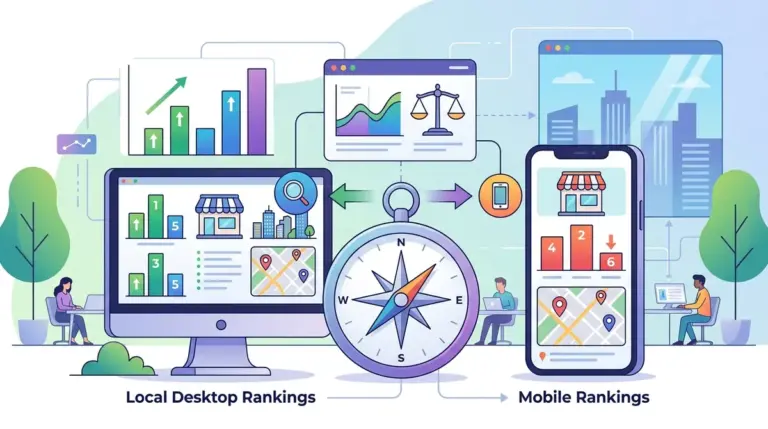


National rank tracking is a vanity metric for any business that relies on physical foot traffic or service-area leads. If your tracking software reports a stable position three for "emergency plumber" across an entire metropolitan area, it is likely averaging data that masks significant local volatility. In reality, a user two blocks away from your office sees a completely different SERP than a user five miles away. Hyperlocal keyword rank tracking—monitoring positions at the zip code, neighborhood, or even GPS coordinate level—is the only way to diagnose why certain locations are underperforming while others dominate.
The Erosion of the City-Level Search Result
Google’s search algorithms, specifically those following the Venice and Possum updates, have shifted heavily toward proximity. The "Near Me" era has evolved into a "Right Here" era. When a user searches for a service, Google prioritizes the proximity of the business to the user’s current IP address or GPS location. This means the concept of a "city-wide" ranking is largely a myth. A law firm might rank #1 for "personal injury lawyer" when the search is conducted from the downtown business district but drop to #12 when the same search is performed from a residential suburb ten miles out.
Best for: Multi-location franchises, healthcare networks, home service providers, and retail chains that need to justify marketing spend per rooftop.
Without hyperlocal data, SEO teams often chase broad keywords that have high search volume but zero conversion potential because the business doesn't appear in the local map pack for the searcher's specific location. Tracking at the neighborhood level reveals these "blind spots," allowing for more surgical optimizations of Google Business Profiles and localized landing pages.
The Disconnect Between Organic and Map Pack Rankings
Hyperlocal tracking is essential because organic rankings and Map Pack (Local Pack) rankings do not always move in tandem. You might hold the top organic spot for a high-intent keyword, but if a competitor is physically closer to the searcher, they will likely take the Map Pack's prime real estate. Tracking both simultaneously at specific coordinates allows you to see where your physical presence is failing to convert into digital visibility.
- Grid Tracking: Visualizing rankings across a 5x5 or 10x10 mile grid to see exactly where your "authority radius" ends.
- Zip Code Specificity: Isolating performance in high-value residential areas versus industrial zones.
- Competitor Proximity Analysis: Identifying which local "mom and pop" shops are outranking your national brand in specific clusters.
Quantifying the Revenue Impact of Neighborhood-Level Visibility
For agencies, the commercial value of hyperlocal tracking lies in reporting accuracy. Providing a client with a report that shows "up 5 positions" globally is meaningless if their specific store in North Austin is seeing a 20% drop in phone calls. Hyperlocal tracking allows you to correlate rank fluctuations with actual store-level revenue. If rankings drop in a specific zip code, you can immediately investigate local factors: a new competitor opening nearby, a localized dip in review sentiment, or a technical error on a location-specific landing page.
Pro Tip: Never set your tracking location to a generic city center if your business is located in the suburbs. Google treats the "centroid" of a city as a specific point. If you track from the city center but your business is 8 miles away, your data will show you are failing, even if you are dominating your actual neighborhood. Always track from the exact latitude and longitude of your physical storefront.
Identifying "Ghost" Competitors in Local Search
When you track keywords at a national or even a broad city level, your primary competitors appear to be other national brands with high Domain Authority. However, at the hyperlocal level, your real competitors are often small, highly specialized local players who have optimized specifically for that neighborhood. These "ghost" competitors don't show up in national audits, but they are the ones siphoning off your leads.
Hyperlocal tracking exposes these players. By seeing who consistently appears in the Map Pack across different zip codes, you can analyze their local content strategy. Do they have more localized backlinks? Are they mentioning specific neighborhood landmarks in their metadata? This level of competitive intelligence is impossible to gather without granular, location-specific data points.
Strategic Resource Allocation Based on Local Data
Marketing budgets are finite. Hyperlocal tracking informs where to deploy those resources. If the data shows you are already dominant in Zip Code A but invisible in Zip Code B, you can shift your Local Service Ads (LSAs) or Google Ads spend to target the area where your organic presence is lacking. Conversely, if you are already winning the Map Pack in a specific neighborhood, you might reduce your ad spend there to maximize ROI elsewhere. This level of precision transforms SEO from a general awareness play into a direct-response driver.
Operationalizing Hyperlocal Data for Multi-Location Brands
For brands managing 50 or 100+ locations, the sheer volume of data can be overwhelming. The key is to use hyperlocal tracking to identify patterns rather than just monitoring individual keywords. Are all locations in a specific region underperforming? This might indicate a regional manager issue or a lack of localized content for that specific climate or demographic.
By grouping keywords by location and intent, you can create "Local Health Scores." This allows stakeholders to see at a glance which territories are winning the local search battle and which require an immediate injection of SEO resources. It moves the conversation away from "How is our SEO doing?" to "Which specific stores need help this month?"
Refining Your Local Search Strategy
To move beyond basic tracking, start by auditing your current keyword list against the actual physical locations of your target audience. Stop prioritizing broad terms that have no local intent and start focusing on the intersection of "Service + Neighborhood." Ensure your tracking tool is configured to pull data from the specific zip codes where your highest-spending customers reside. Finally, integrate this data with your Google Business Profile insights to see the direct correlation between a rank increase in a specific neighborhood and an increase in "Request for Directions" or "Click to Call" actions.
Hyperlocal Tracking FAQ
How often should I track hyperlocal rankings?
For high-competition industries like locksmiths, lawyers, or emergency repairs, daily tracking is necessary because the Map Pack can fluctuate hourly based on competitor proximity and open hours. For general retail, weekly tracking is usually sufficient to spot trends without being overwhelmed by minor volatility.
Does tracking from a specific zip code affect my organic results?
Tracking itself does not affect results, but the data it provides will likely show lower organic positions than you expect. This is because "near me" intent triggers a localized SERP that pushes traditional organic results further down the page. Hyperlocal tracking gives you the "real" view of what a customer sees.
Can I track rankings at the street level?
Yes, many advanced tools allow for GPS-based tracking. This is particularly useful for businesses in dense urban environments (like Manhattan or London) where moving two blocks can completely change which businesses appear in the top three results of the Map Pack.
Why do my rankings look different on mobile vs. desktop in the same zip code?
Google uses more precise location data (GPS) for mobile searches compared to desktop searches (IP-based). Hyperlocal tracking should ideally account for mobile-specific rankings, as mobile users are more likely to have immediate transactional intent.